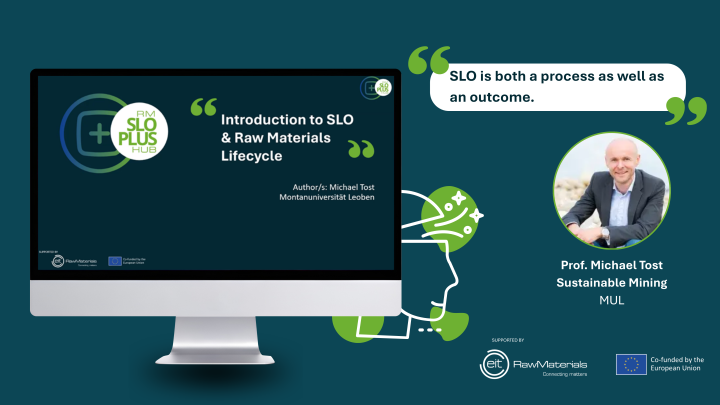
As part of the RM-SLO-PLUS-HUB Webinar Series, leading experts from academia and industry shared their perspectives on the key principles of the Social License to Operate (SLO) and its growing importance for the sustainable development of the raw materials sector.
One of these valuable contributions came from Professor Michael Tost, Professor for Sustainable Mining Technology at Montanuniversität Leoben, who highlighted a fundamental message that is increasingly shaping responsible mining projects worldwide:
“A legal license is no longer enough. Projects also need a social license to operate.”
Professor Tost emphasized that while regulations, permits and legal frameworks provide the formal basis for developing mining projects, long-term success depends on something equally important: the trust, acceptance and support of the communities that are directly or indirectly affected by these activities.
Unlike legal permits, a Social License to Operate cannot be granted by legislation or regulatory authorities. It is earned over time through transparency, meaningful dialogue, fairness, accountability and continuous stakeholder engagement. Building and maintaining trust requires an ongoing commitment to listening to communities, addressing concerns and creating shared value.
This perspective reflects one of the core principles promoted by the RM-SLO-PLUS-HUB project. Through its webinar series, training activities and practical consulting services, the project aims to strengthen knowledge and provide stakeholders with the tools and best practices needed to support responsible and socially accepted raw materials development across Europe.