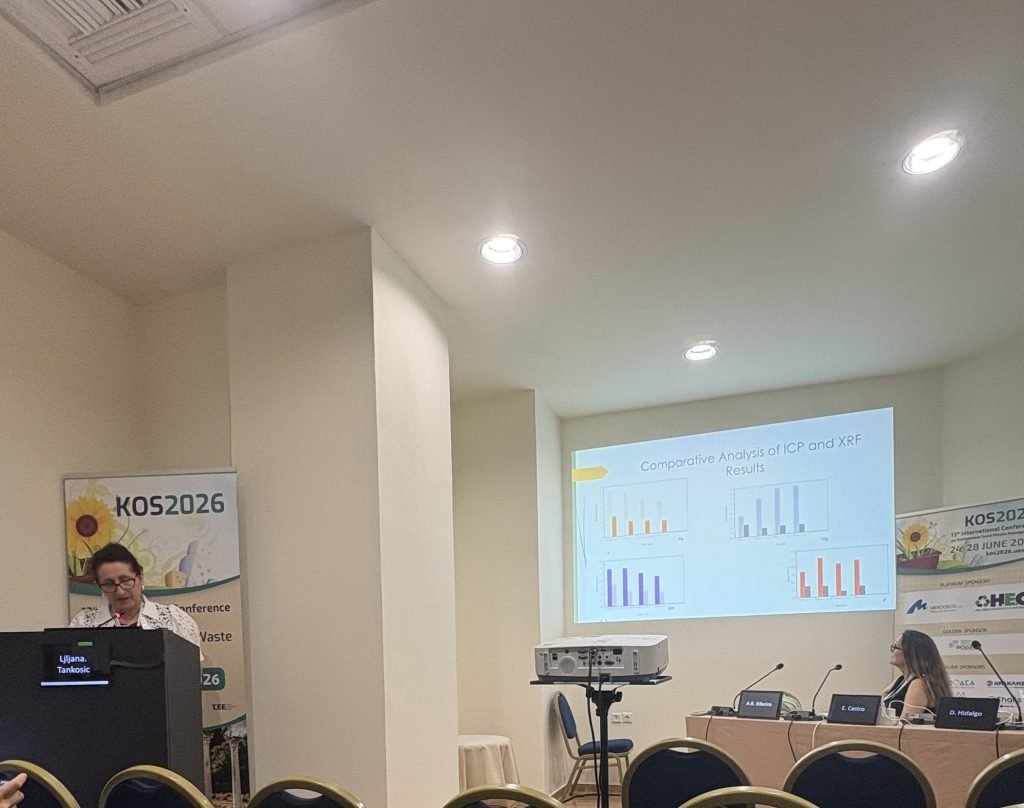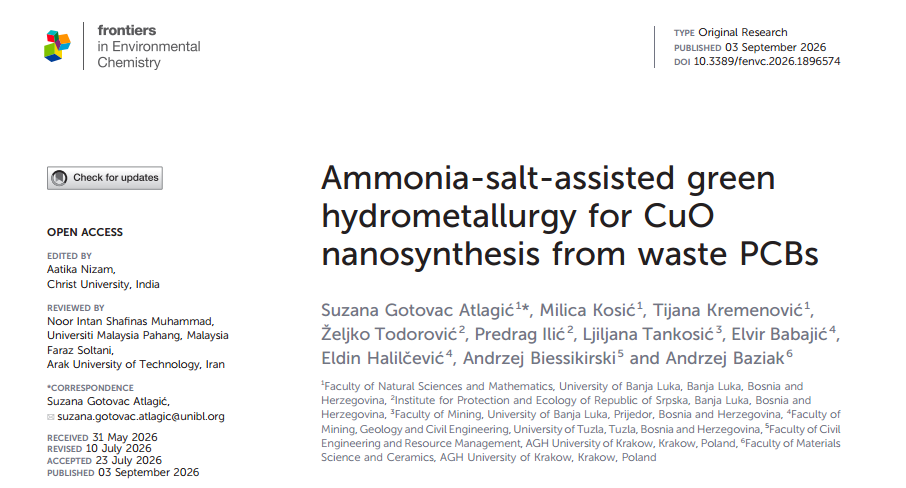
As part of the RM-SLO-PLUS-HUB project, researchers from our partner institution, the University of Banja Luka (UNIBL), have contributed to research focused on the recycling and valorisation of waste printed circuit boards (PCBs).
We are pleased to share the publication of a new scientific paper:
“Ammonia-salt-assisted green hydrometallurgy for CuO nanosynthesis from waste PCBs”
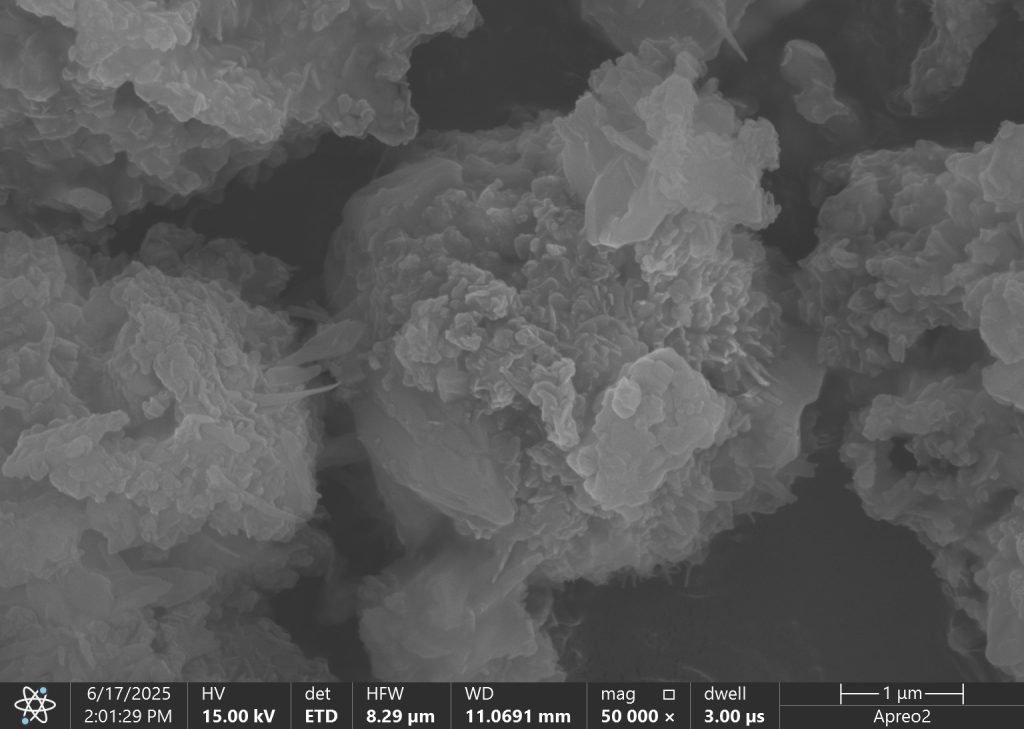
The study explores a more sustainable approach to recovering copper from waste PCBs using ammonia-salt-assisted hydrometallurgy and its subsequent transformation into copper(II) oxide (CuO) nanoparticles.
One of the investigated PCB fractions achieved a copper extraction efficiency of approximately 99.8%, demonstrating the significant potential of waste PCBs as a source of this critical raw material (CRM) and other secondary resources. The research highlights how electronic waste can be transformed from an environmental challenge into a valuable resource for the production of advanced materials, supporting the principles of urban mining, circular economy and sustainable resource management.
We are especially proud of the contribution of young researchers from UNIBL, whose work contributes to advancing scientific knowledge, raising awareness of sustainable resource use, and supporting informed stakeholder dialogue and greater acceptance of sustainable practices and technologies – key aspects of Social License to Operate (SLO).
Read the publication: https://lnkd.in/dpVZrU7g