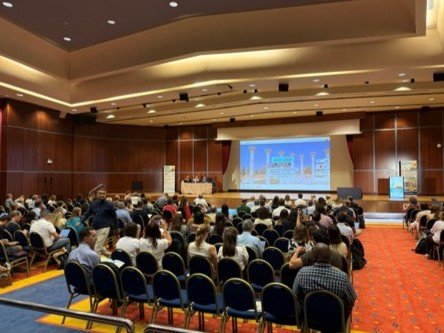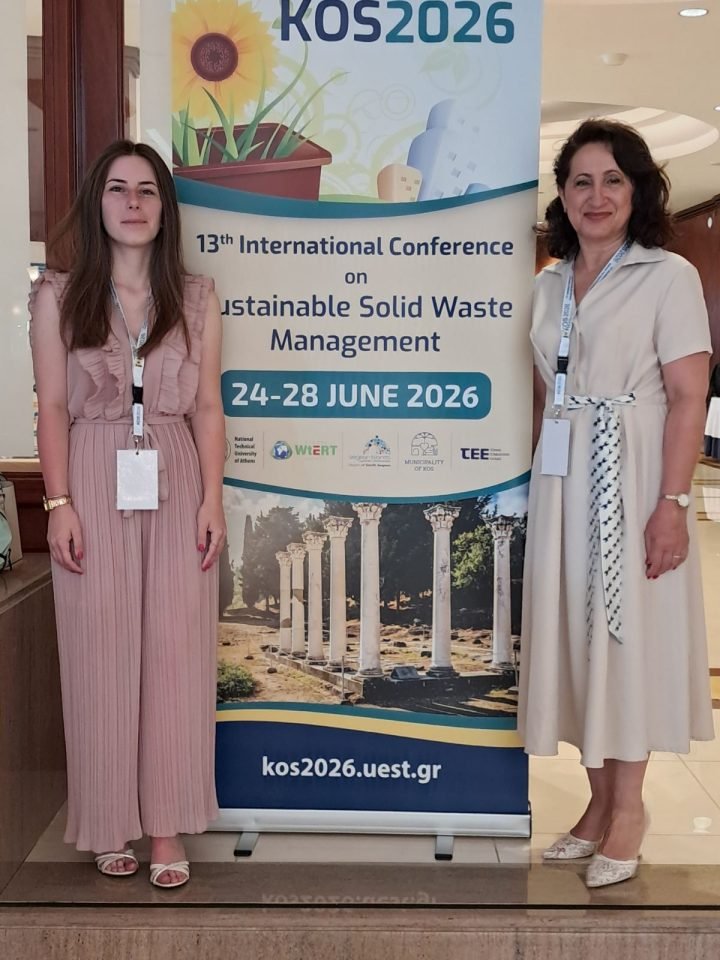
The 13th International Conference on Sustainable Solid Waste Management (KOS 2026), held on the Greek island of Kos, once again brought together researchers, industry professionals, and decision-makers from Europe and the World to explore innovative approaches to sustainable waste treatment and circular economy practices.
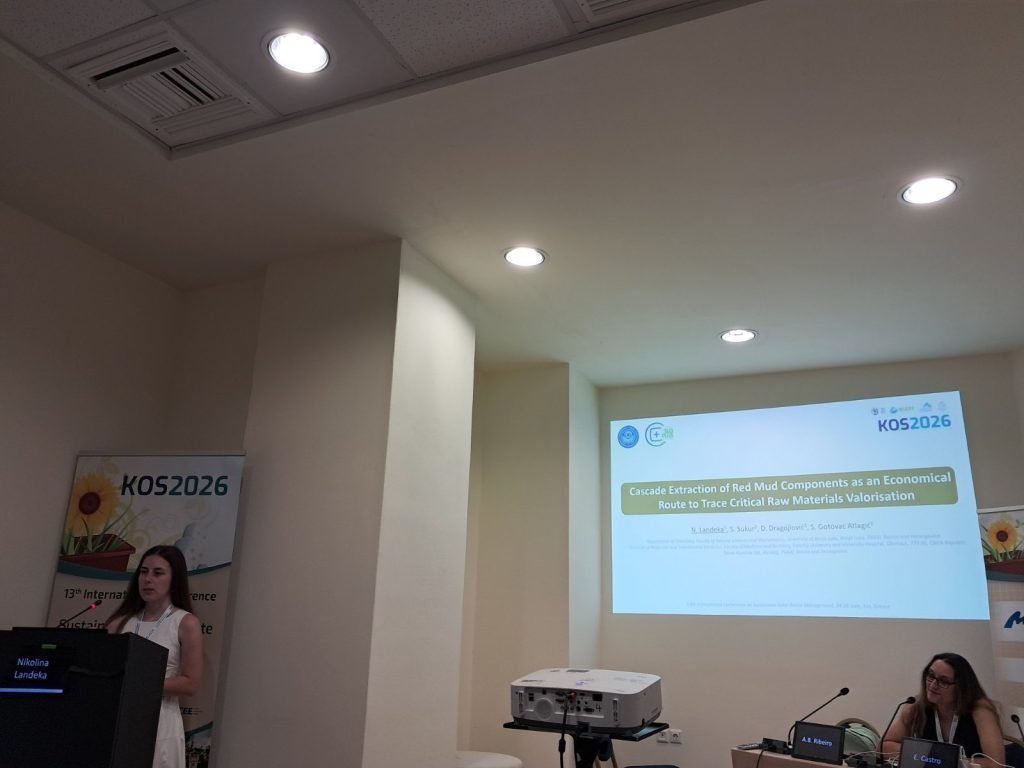
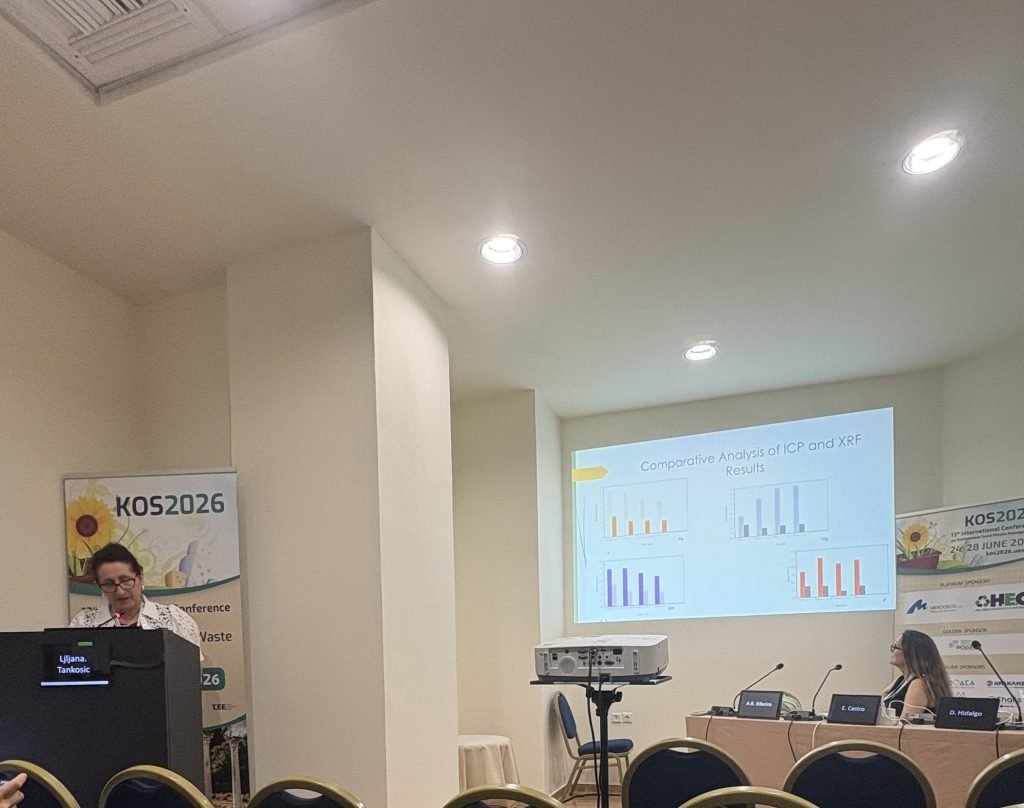
Representing the RM-SLO-PLUS-HUB project, Prof. Dr. Ljiljana Tankosić and chemistry master Nikolina Landeka participated in the conference by presenting their respective research focused on the valorization of tailings from mineral processing industries that have an immense economic significance for their country, Bosnia and Herzegovina.
Prof. Tankosić presented the latest findings of the study on the composition and iron-extraction potential of ancient Roman slag located near the Bosnia’s City of Prijedor. Deposited in massive quantities, this slag originates from the era when the Romans mined iron ore in the region. Today, this area remains home to one of the most significant mining points in the Balkans. Her presentation detailed how this historic waste could be successfully valorized as a secondary raw material.
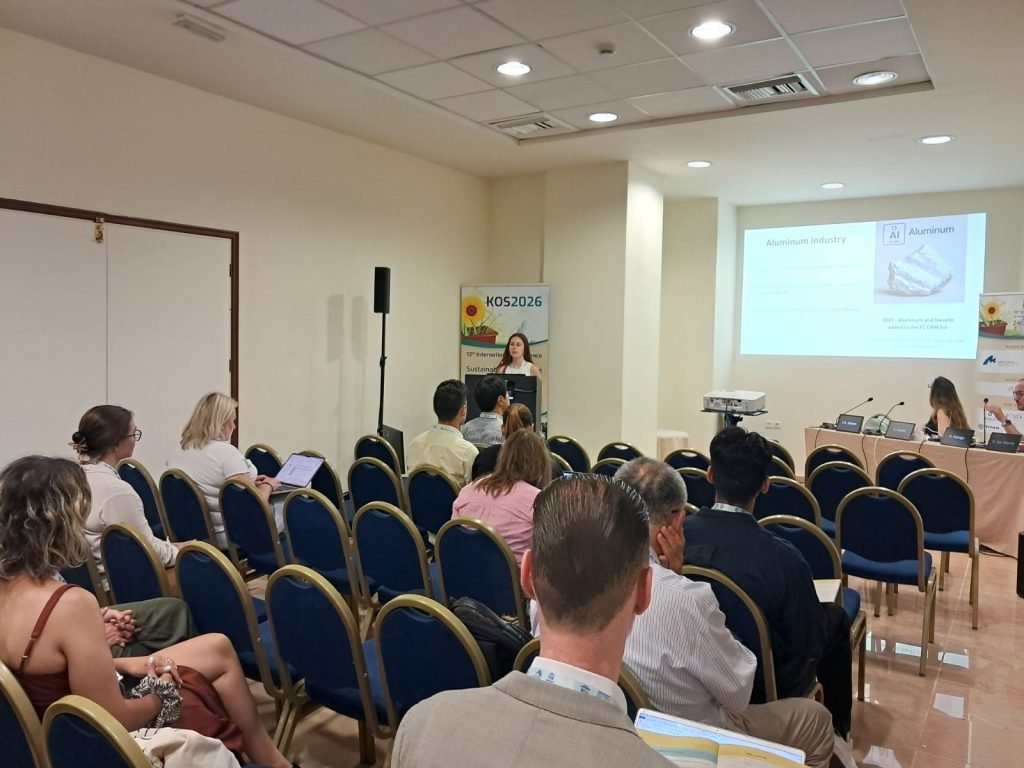
Miss Nikolina Landeka presented the ongoing research on the valorization of red mud, a bauxite processing byproduct from the “Alumina” factory in Bosnia and Herzegovina. Her presentation highlighted the innovative chemical treatment aimed at recovering valuable components from this industrial waste, thereby providing new sources of critical raw materials.
Through their active participation, Prof. Tankosić and Miss Landeka successfully demonstrated the core principles promoted by the RM SLO PLUS HUB project. They emphasized a crucial message that Europe must safeguard and sustain its materials and processing industries by implementing the highest environmental standards and circular economy principles.
While the core presentation and technical sessions ran from June 24th to 26th, the conference concluded on June 27th and 28th with an inspiring series of technical and cultural excursions. Participants had the opportunity to visit a local olive oil production facility and a traditional winery, offering direct insights into regional agricultural waste management and circular practices. The journey also included visits to the archaeological sites and field trip to the active volcanic island of Nisyros. These activities allowed the participants to immerse themselves in the rich history, culture, and unique geological heritage of Kos and Greece, all while fostering valuable international networking, collaboration, and knowledge exchange.