SLO Training Package for the European raw materials sector
We are pleased to announce the successful completion of our online training series on the Social Licence to Operate (SLO) in the raw materials sector. Designed to bridge the gap between regulatory requirements and community acceptance, the webinars brought together industry professionals, researchers, students, and public authority representatives from across Europe.
Day 1: Foundations, Governance, and Best Practices
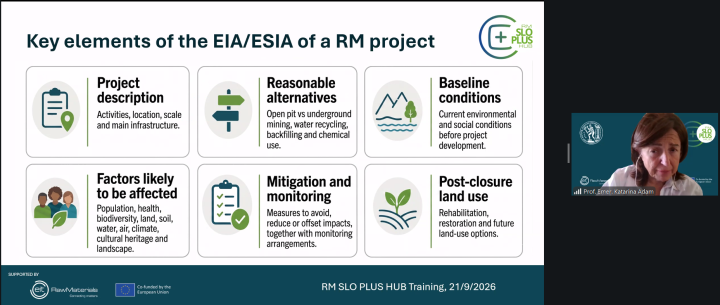
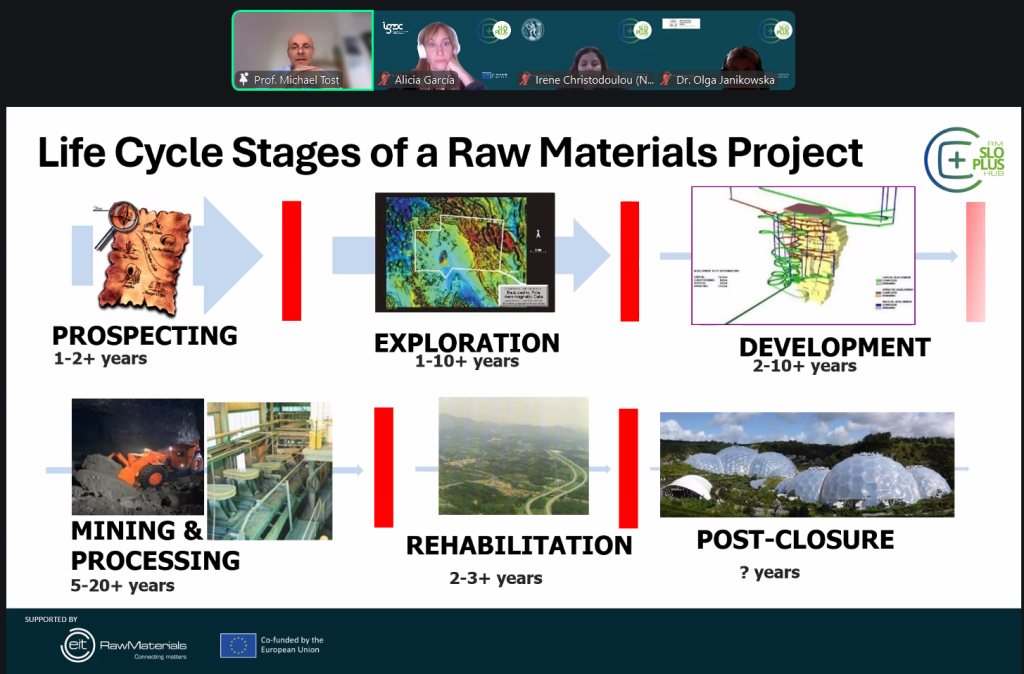
The opening day established a clear understanding of SLO, its connection to ESG criteria, and its role across the raw materials life cycle. Discussions emphasized that SLO is built on perceptions, trust, and relationships rather than static permits, noting that initial interactions during exploration leave lasting impressions on long-term acceptance. The Environmental Impact Assessment (EIA/ESIA) framework was highlighted as the primary regulatory bridge to SLO, with public consultation serving as a crucial stage for transparent dialogue. European case studies from Sweden, Spain, and Portugal demonstrated how administrative delays, jurisdictional overlap, and communication gaps can create legal uncertainty and halt projects.
Day 2: Practical Application, Toolkit, and Public Engagement
The second day shifted from theoretical frameworks to interactive exercises and concrete action plans. Participants engaged in a Stakeholder Action Sprint, stepping into the shoes of investors, local community members, public authorities, and NGOs. This allowed attendees to explore conflicting priorities, identify non-negotiable red lines, and prioritize trust-building actions during early project phases. A structured communication framework was also introduced via the SLO Communication Toolkit, emphasizing that effective communication must be two-way, human-centered, and proactive, as remaining silent allows external actors to define the narrative. Finally, the concluding plenary session examined how public consultations can evolve from passive “decide-announce-defend” exercises into collaborative platforms for co-design and long-term engagement.
A resounding takeaway from all speakers and attendees is that a Social Licence to Operate is not a one-time approval or a formal administrative box to tick; it is an ongoing, dynamic process of relationship-building that must be continuously earned and maintained. Further engagement activities will continue to strengthen collaboration and help shape a more resilient and socially accepted future for the sector.