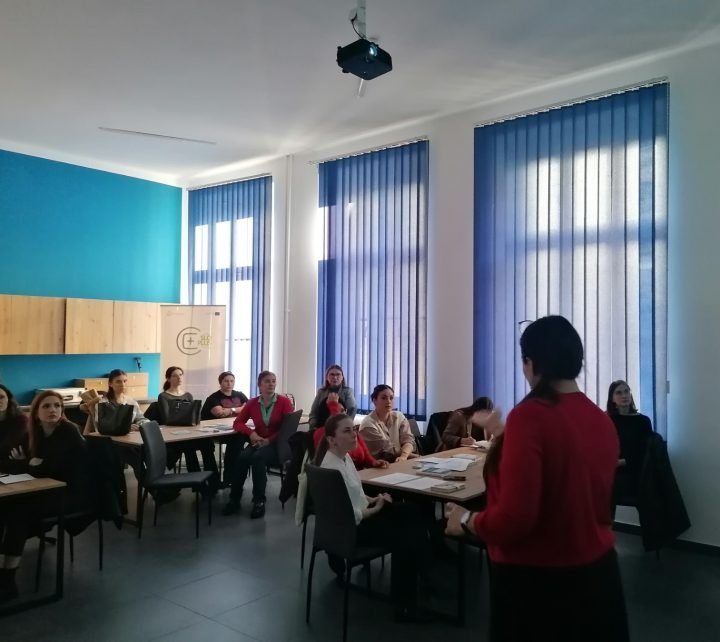
Focus groups are one of very important deliverables of RM-SLO-PLUS-HUB project, and they will be held at all partners premises. Let us display how our partner, University of Banja Luka organized their two focus groups to discuss sustainable industrial operations. The discussions brought together students and experts from various disciplines in both industry and academia.
Within the Focus group on Sustainable Industrial Operations in Urban Areas, participants discussed on how industrial activities could be managed sustainably within urban environments, while upholding a strong Social Licence to Operate (SLO). This topic is of particular interest for the citizens of the city of Banja Luka, which was always one of the leading industrial centres in Bosnia and Herzegovina. However, in the last three decades, it has undergone intense urbanization, becoming one of the major administrative centres. Consequently, densely populated neighbourhoods have surrounded several long-standing industrial facilities that once stood on the periphery. Drawing on examples from cities such as Vienna and Copenhagen, participants proposed introducing more green and public spaces, to improve the visual appearance of industrial areas, and developing educational or cultural elements that highlight the city’s industrial heritage.
The Focus Group on Citizens’ Perception and Social Permission (SLO) for the Implementation of Smart Traffic highlighted another important struggle for Banja Luka’s citizens – insufficiently developed urban transport network. During the focus group session, participants were presented with examples of best practices from Europe, such as Malmö and Gothenburg, where citizens use bicycles as their primary mode of transportation. On the other hand, the citizens of Banja Luka, do not have walking and cycling as part of their lifestyle, mainly due to lack of cycling lanes, as well as a general lack of awareness.
Overall, the focus group highlighted a shared belief that industry and urban life can coexist successfully when guided by sustainable practices, modern environmental standards, and ongoing engagement with the public.